STUDY INTERNATIONALLY, SEAMLESSLY.
March/April 2022
For a Public Relations course, I was tasked with working with a school organization to identify problem areas within their organizations and attempt to fix those problems through a marketing campaign. I chose to work with the Study Abroad office and identified a few key problems that their organization was facing. I created a three month campaign dedicated to showing new students at Webster University the unique benefits of studying abroad with an attempt to break down the barriers to entry that stop most students from choosing to study abroad.
I worked closely with Kelly Heath during this project, who felt that the campaign was both realistic, bold, and implementable for the Study Abroad program while thoroughly addressing barriers to entry in an engaging way for students.
90% OF WEBSTER STUDENTS INTEND TO STUDY ABROAD. ONLY 24% DO.
I decided to identify the barriers to entry that students face when it comes to studying abroad through a survey of Webster students. We identified three main barriers to entry - cost, curriculum, and personal life.
Of interviewed students, 96% of students who initially wanted to study abroad but did not discussed the fear of not being able to afford studying abroad when they were already burdened by student loans. 76% of interviewed students mentioned that they were worried that they wouldn’t be able to graduate on time if they chose to study abroad. Finally, a smaller, yet significant percentage of students mentioned having responsibilities at home that they needed to attend to, including family, pets, and leases for housing. I decided it was important to tackle these barriers to entry early on in student’s college careers, during their freshman and sophomore year.
Of the students interviewed, less than 15% of students knew about the class options and financial support offered by Webster University specifically for the Study Abroad program.
WEBSTER STUDENTS LOVE EUROPE.
The Webster University network of campuses has 27 international campuses spanning the globe, yet in 2019, 73.8% of students went to a European campus. Only 12 students in the same year chose to visit the campus in Ghana. When working with the Study Abroad program, they emphasized that it was important to them to draw more students to under-enrolled campuses, specifically the Ghana campus.
I interviewed with professors who have hosted the visits to Ghana in order to identify the personas of students who have chosen to visit the Ghana campus in comparison to students who opt for European campuses, and identified that the students who are more likely to visit these campuses are adventure-seeking, confident, and bold. They’re more willing to step outside of the box and aren’t afraid of a little culture shock. I knew it would be important in my campaign to embolden students through strategic design in order to make them feel more comfortable with making big decisions they might not normally want to take.
goals
Reach at least 80% of total incoming freshmen and sophomores with information on Study Abroad.
Increase interest in studying abroad at non-European campuses by 25% from 20 yearly inquiries to 25 yearly inquiries.
Create engaging and informative social media content to break down barriers to entry and reach incoming freshmen and sophomore students where they’re at - TikTok, Instagram, and YouTube.
august 2o22
In August, we agreed to launch a scholarship for students to attend lower-enrolled campuses at a lower cost in order to boost interest.
We opted to take over Webster’s Welcome Week in order to attract incoming freshmen and sophomores. 90% of Webster students interviewed stated that they had attended at least one Welcome Week event during their time at Webster, and attended more frequently during their beginning years at Webster.
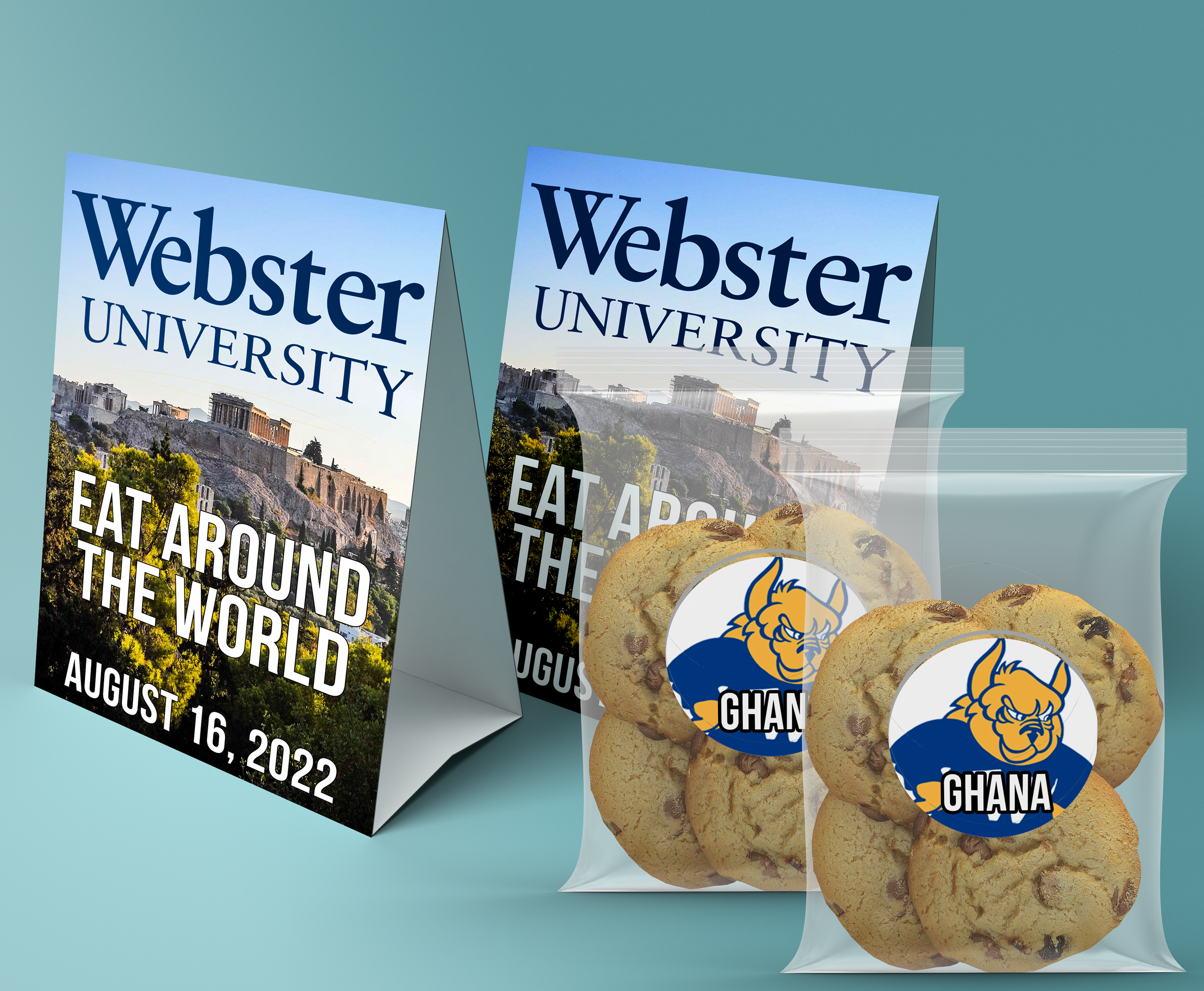
For Welcome Week, we chose to do an “Eat Around The World” event, showcasing booths with cookies from each of Webster’s international campuses with engaging and informational brochures for students to learn about each of the campuses, as well as provide scholarship information at the booths for under-enrolled campuses.
SEPTEMBER 2022
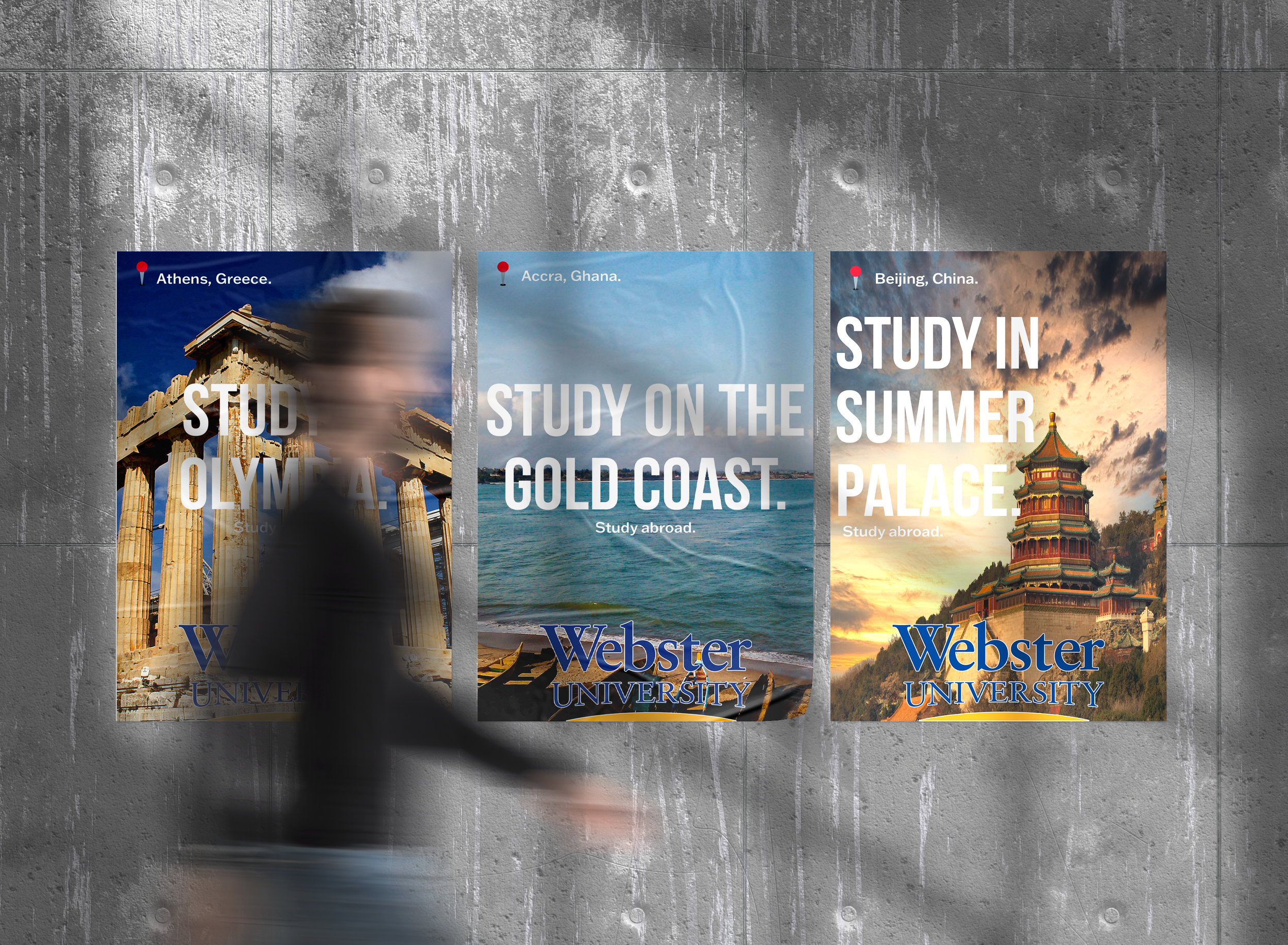
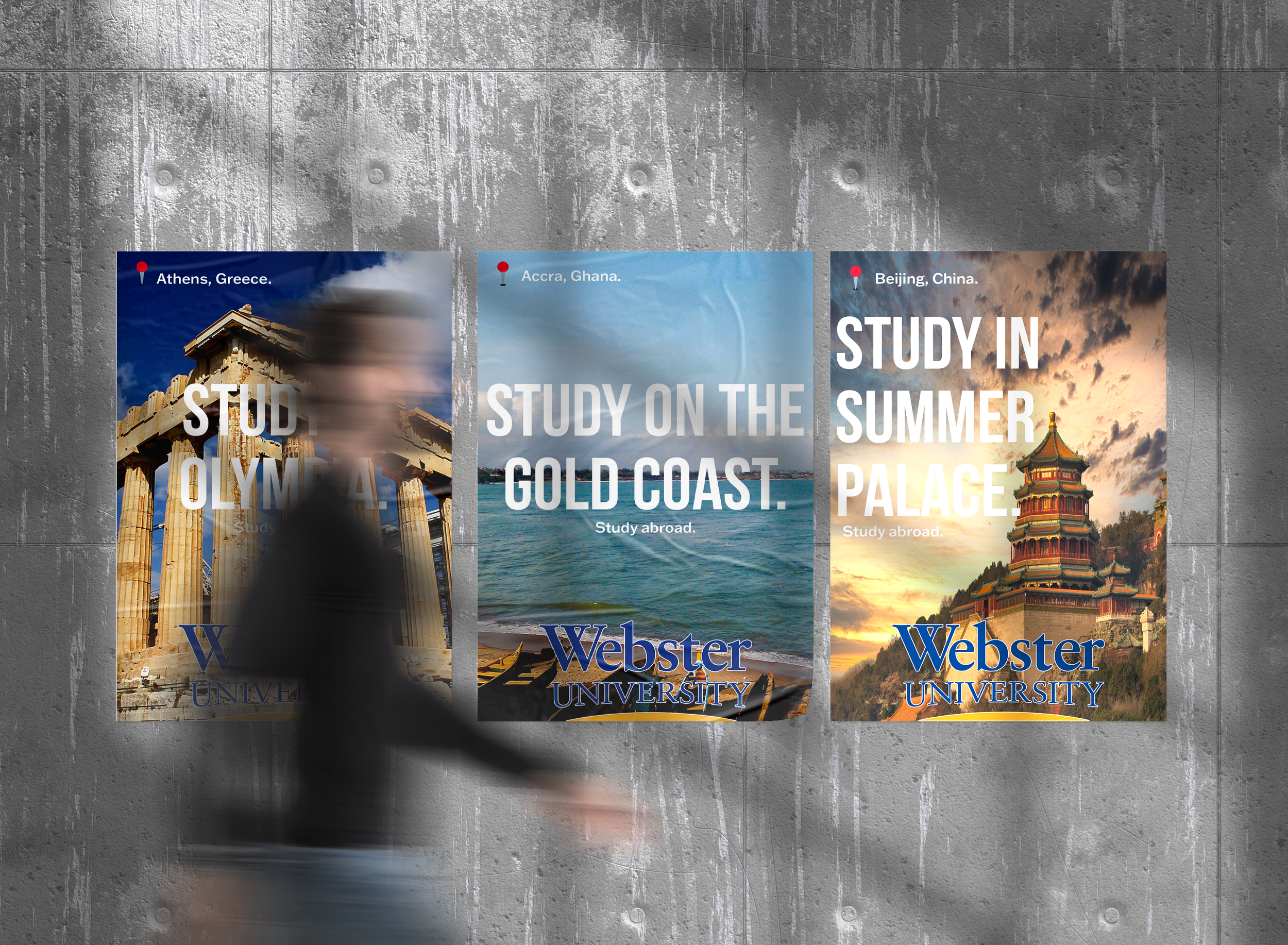
95% of interviewed students at Webster said that they do pay attention to campus signage, and a bold design is more likely to draw in their attention. I studied the places with highest amounts of walking traffic in Webster University, including the parking garage, Marletto’s, and the bottom floor of Sverdrup to create a map of where these posters will be placed.
Over fall break, we budgeted $2,000 to give students traveling to under-enrolled campuses in compensation for TikTok and Instagram video content for the Study Abroad social medias and TikTok, paired with a brand guideline packet to make sure that content is appropriate and resonates with the overall image of the campaign.
October 2022
In October, we will be utilizing the content from students who travelled abroad over spring break in order to rebrand all of the Webster University Study Abroad social media accounts.
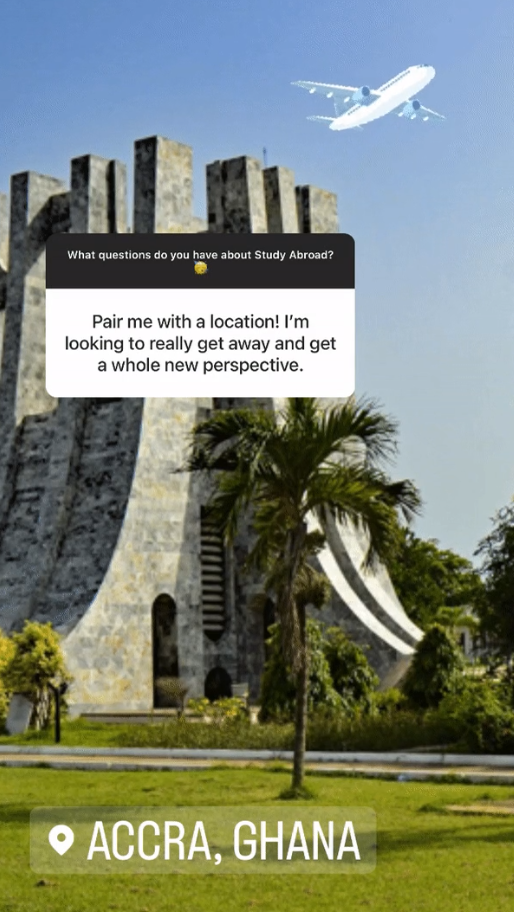
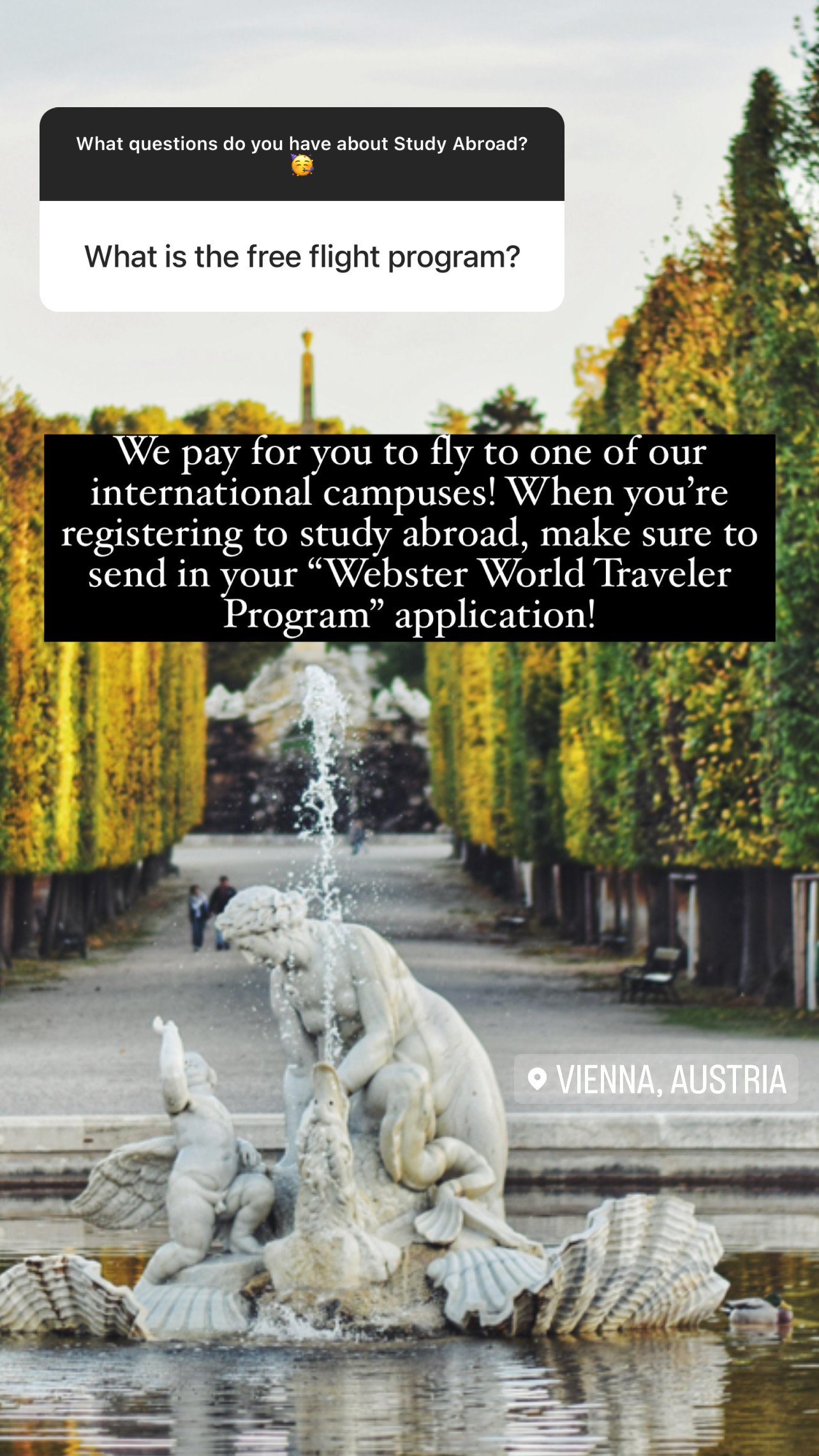
At this time, we will also be using Instagram stories in order to create interactive content with Webster students, offering Q&A’s through Instagram to make it easier for students to get access to information without having to physically come to the Study Abroad office or send an e-mail.
We will also offer a personality test, which allows students to be paired with a Study Abroad location based on their personality and interests. Students can also use the Q&A feature to be matched with a location on the Study Abroad Instagram.
At the end of October, we will send out a finishing benchmark survey to gauge students understanding of the program, reassess their feelings about barriers to entry, and gauge general awareness about non-European Webster campuses.